ServicesCommercial Trash Pickup
Commercial Trash Pickup in Apopka
We set up recurring trash pickup for businesses, matched to what you throw away. Cardboard, food scraps, pallets and shrink wrap each fill a container differently, so we size the container and the schedule around your waste. Get your quote by phone, then start service when it suits you.
Pickup built around what your business throws out
Commercial trash pickup is a standing arrangement. A container stays on your property, and our truck empties it on a set schedule. It fits restaurants, retail shops, offices, warehouses, auto shops and small manufacturers that make steady waste week after week rather than one big burst.
The material decides most of the setup. Loose corrugated cardboard is light but bulky, so it fills a bin long before the bin gets heavy. Wet food waste is dense, and in Central Florida heat it starts to smell within a couple of days, so it needs more frequent pickup and a lid that closes tight. Broken pallets and scrap lumber are heavy and awkward to stack. We ask about your mix first and size everything from there.
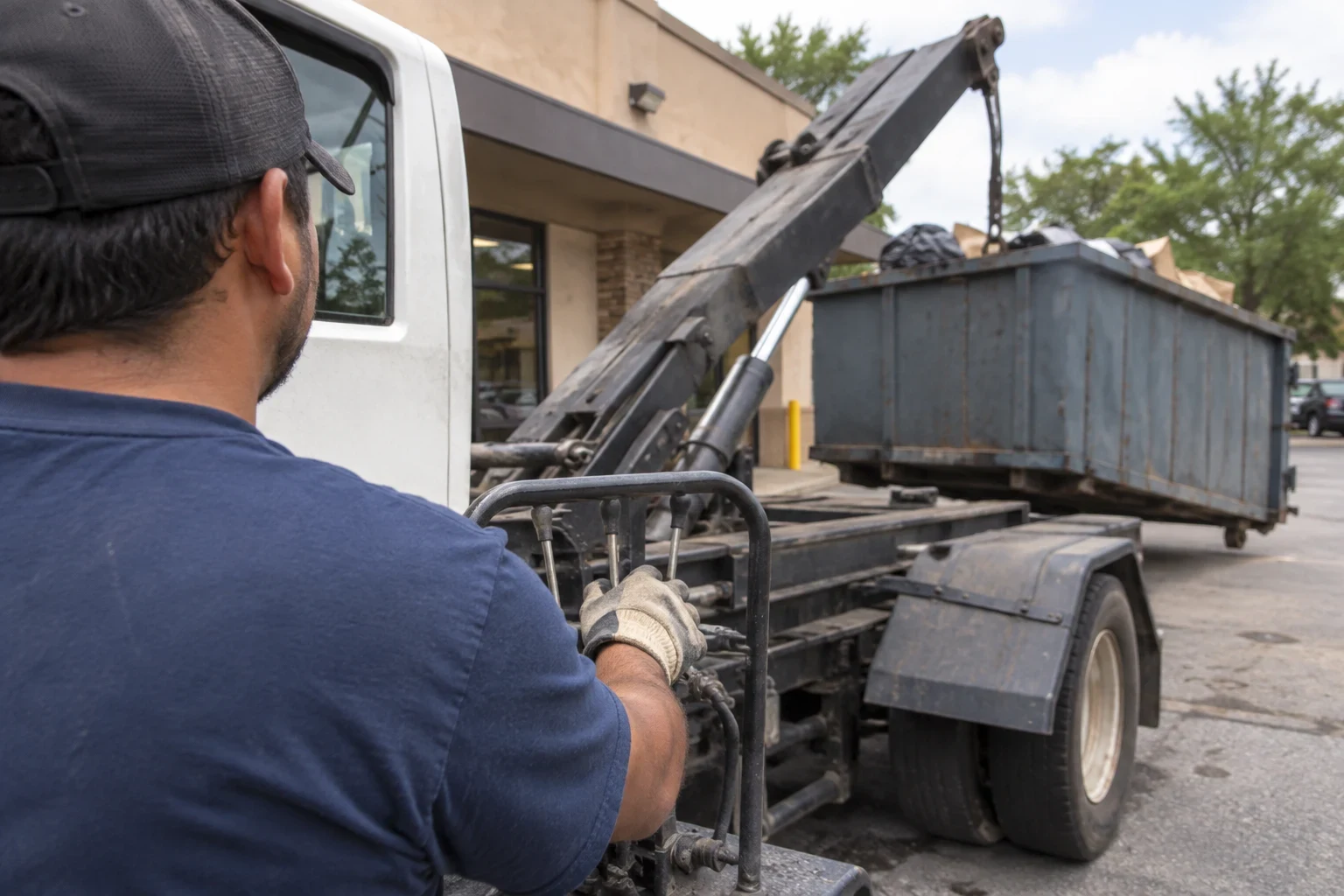
If you need a large open-top container for a one-time cleanout or a buildout of your space, that is our roll off dumpster rental. The lidded steel bins most businesses use for ongoing pickup are covered in more detail under front load dumpster service.
What recurring service includes
A container sized to your volume
We place a lidded steel container in the yard size that holds your waste between pickups. Sizing it from your real volume keeps you from paying for empty air or watching bags pile up beside a full bin.
A fixed pickup schedule
Your container is emptied on the same days each week, from once a week to several times a week. Staff know when the bin has room, and you know what to expect on the bill.
Placement checked before delivery
A front-load truck lifts the bin over the cab with its forks, so the spot needs a solid concrete or asphalt pad, a straight approach and no low wires or branches overhead. We go over the location with you so the first pickup goes smoothly.
Clear rules on what goes in
We explain what belongs in the bin and what stays out. Cardboard broken down flat, food waste bagged, and no liquids, paint, batteries, tires or electronics. Keeping those out avoids rejected loads and extra charges.
Adjustments as your volume changes
If the bin overflows before pickup day or sits half empty, we change the frequency or the container size.
Signs your business needs scheduled pickup
Cardboard stacking up by the back door
Shipping boxes that are not broken down take up five or six times the space of flattened ones. When they start leaning against the wall, you need more container capacity or more pickups.
Lids that won't close
An overfilled bin lets rain in, and soaked cardboard and food waste gain a lot of weight. Open lids also invite raccoons, birds and blowing litter.
Odor and flies by midweek
Food scraps and produce trim break down fast in warm weather. If the smell shows up before pickup, the schedule is too far apart for the material.
Staff hauling trash themselves
Loading a pickup truck and driving to a drop-off costs paid hours and wear on the vehicle. A scheduled bin takes that job off the list.
How we set up service
- 1
Talk through your waste
On the phone we ask what you throw away, roughly how much, and where a container could sit. That is enough to give you a quote and a suggested schedule.
- 2
Confirm the spot
We check the pad, gate width, overhead clearance and the truck's approach. If the first choice will not work, we suggest a better one before anything is dropped.
- 3
Delivery
We set the container on the agreed spot with the lid facing the side your staff will use.
- 4
Regular pickup
On each scheduled day the truck lifts, empties and sets the bin back in the same place. You do not need anyone on site.
- 5
Fine-tune after the first weeks
Once we see how full the bin is at each pickup, we suggest changes to size or frequency if needed.
What sets the price of commercial pickup
Your rate depends on how much you throw away, what it is and how often we come. We quote by phone once we know those details. The quote lists each part of the service so your monthly bill matches what you agreed to.
- Container size
- Larger yard sizes hold more between pickups. Sometimes one bigger bin costs less over a month than more frequent visits to a small one.
- Pickup frequency
- Each extra pickup per week adds truck time. Food-heavy waste usually needs more visits than dry cardboard, which can often wait.
- Material weight
- Disposal is tied to weight. A bin of wet food waste or scrap lumber weighs far more than the same bin of flattened boxes, and that shows up in the price.
- Extra pickups and overflow
- Bags left beside a full container or a call for an unscheduled pickup add cost. Getting the size right at the start keeps those rare.
Commercial trash pickup questions
Something not covered here? (407) 955-5947
Can cardboard go in the same bin as our regular trash?
Yes, it can share the container. Break boxes down flat first, because loose boxes trap air and fill the bin early. If cardboard is most of your waste, mention it when you call so we size for volume rather than weight.
How often should our bin be emptied?
It depends on the material. Dry waste like packaging and office paper can usually go a week. Food waste in warm months often needs two or more pickups a week to stay ahead of odor and flies.
What can't go in a commercial dumpster?
Liquids, paint, oil, solvents, batteries, tires, electronics and anything hazardous stay out. These can leak, cause fires in the truck or get a load turned away. If you are unsure about an item, ask us before it goes in.
What happens if our bin fills before pickup day?
Give us a call and we can talk about an extra pickup. If it happens more than once, the better fix is usually a larger container or one more pickup per week.
Do we need a front-load bin or a roll-off?
For steady weekly waste, a front-load bin is the usual choice because it is compact and emptied in place. A roll-off fits one-time jobs like clearing out a storage room or renovating a unit, where a lot of heavy debris comes out at once.
Set up pickup that fits your waste
Tell us what your business throws away and where a container can go. We will give you a quote by phone and a schedule that matches the material.