ServicesConstruction Debris Removal
Construction Debris Removal in Apopka
We drop a roll-off dumpster at your job site, you load the debris, and we haul it away when the work is done. We size the container by what you're tearing out, because a load of concrete block weighs far more than the same space full of drywall.
Heavy, Mixed Waste From Remodels, Roofs and Demo
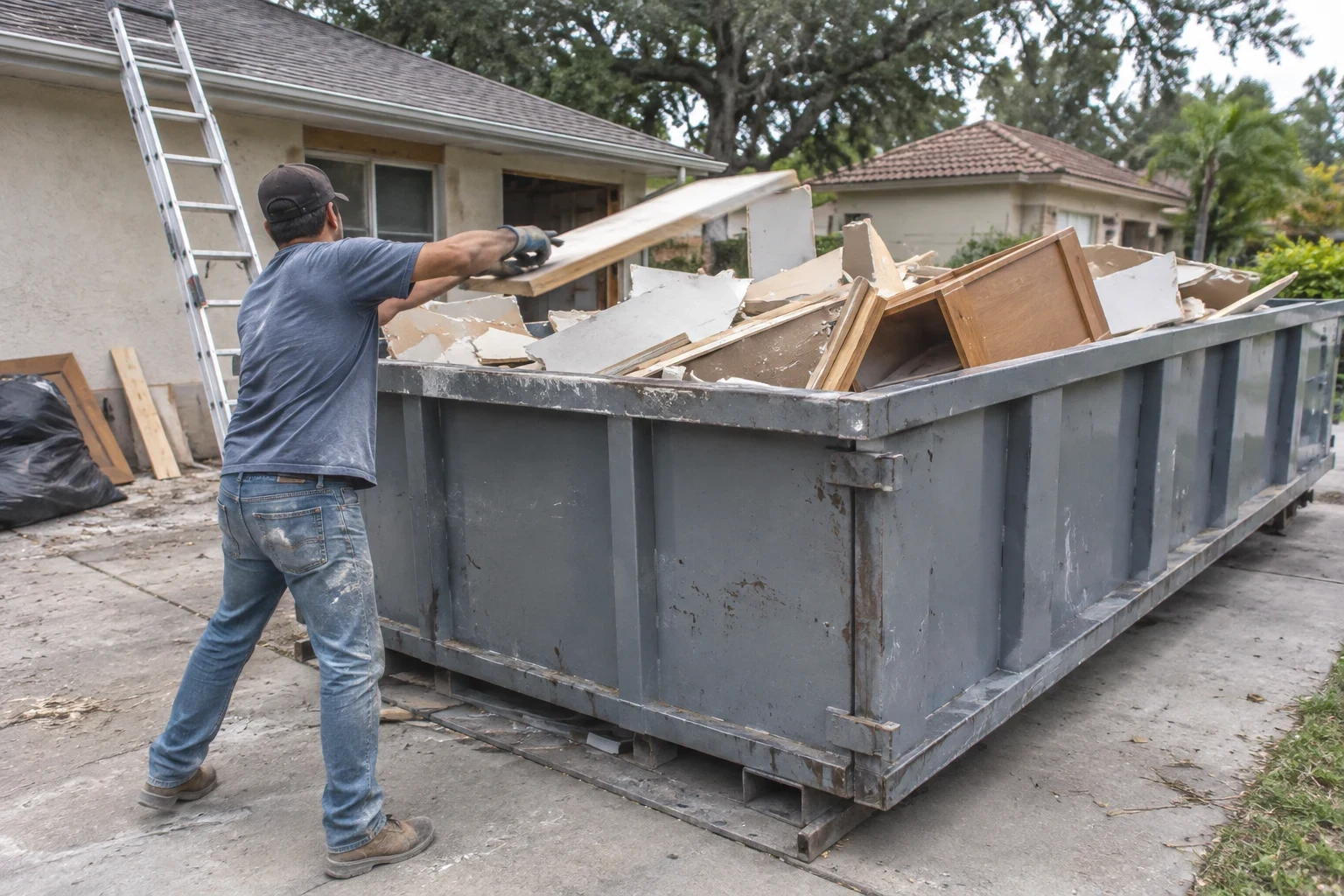
Construction debris removal covers the waste a remodel or build leaves behind: broken drywall, framing lumber, old cabinets, asphalt shingles, tile, stucco and concrete. We bring a roll-off dumpster, set it where your crew can reach it, and take the full load to a facility that accepts that kind of debris.
The material matters more than the volume. Drywall, lumber and carpet are bulky but light, so a larger container fills up before it gets heavy. Concrete, brick, block and wet roofing are dense, and a couple of feet of them can reach a container's weight limit long before it looks full. Tell us what's coming out and we'll match the yard size and the load type to it.
If you need steady trash pickup for a business, our front load dumpster service fits better. For a garage cleanout or general junk with no building debris, see roll off dumpster rental.
What Comes With a Debris Container
A container sized to the debris
We ask what you're removing before we pick a yard size. Light, bulky debris gets a taller container. Dense loads get a smaller, low-wall container so the weight stays legal to haul.
Clean loads for concrete and block
Concrete, brick, block and asphalt kept free of trash can often go to a recycler instead of a landfill. We'll tell you on the call whether a clean load makes sense for your project.
Mixed loads for interior demo
Drywall, lumber, cabinets, flooring, carpet and fixtures can usually ride together in one mixed construction load. That keeps a kitchen or bath gut-out simple for your crew.
Care for your driveway
We can set boards under the steel rails so they spread the weight on pavers or a concrete drive. On a hot afternoon, asphalt softens, and boards help keep the rails from pressing grooves into it.
Swap-outs during longer jobs
When a container fills mid-project, we pick up the full one and drop an empty in the same spot. Roofers and builders use this to keep the work moving.
A flat rate with the terms spelled out
Your quote names the container size, the rental period, the included weight and what would add a charge. You know the rules before the dumpster arrives.
Signs Your Project Needs a Debris Container
Contractor bags are stacking up
Once the garage holds more bagged drywall than your truck can carry in two trips, a container on site is the faster route.
A roof tear-off is on the calendar
Asphalt shingles, felt underlayment and nails are heavy, and a second layer roughly doubles the weight. That needs a container planned for density, not just space.
Tile, stucco or concrete is coming out
Masonry debris tears up truck beds and household bins. It belongs in a low-wall container built for weight.
The pile is sitting outside
Drywall and insulation left in the open soak up a summer rainstorm, getting heavier and messier to move. A covered plan beats a soggy pile on the lawn.
Dump runs are eating the workday
If someone on the crew spends hours driving loads instead of working, one container usually costs less than the lost time.
How a Debris Job Runs
- 1
Tell us what's coming out
Get your quote by phone. We'll ask what you're tearing out, rough quantities, roof squares and layers if it's a tear-off, and where the container can sit.
- 2
Delivery and placement
Our driver backs the roll-off into the spot you chose, checks overhead clearance for wires and branches, and sets boards under the rails if you asked for them.
- 3
Load it evenly
Put heavy pieces on the bottom, spread the weight front to back and keep everything below the top rail. Paint, liquids, tires and batteries usually can't go in, and we'll go over the full list on the call.
- 4
Pickup and haul away
Call when it's full or the job wraps up. We collect the container, take the debris to the right facility, and leave the spot clear.
What Moves the Price
Debris pricing comes down to weight, size and time. We quote a flat rate built on what you're hauling, so the number holds as long as the load matches what you described. Here is what changes it.
- Material weight
- Concrete, block and roofing cost more to haul and dispose of than drywall or lumber of the same volume. Going over the included weight adds a charge, so accurate descriptions keep the cost predictable.
- Container size and rental length
- Larger yard sizes and longer rentals cost more. A swap-out on a long project is priced as its own haul.
- Clean versus mixed loads
- Clean concrete or masonry headed to a recycler is often handled differently than a mixed load bound for a landfill. Trash tossed into a clean load can change how it's billed.
- Placement and permits
- A container on your driveway needs no extra step. One placed on a public street may need a permit from the city or county, and tight access can affect the delivery.
Construction Debris Questions
Something not covered here? (407) 955-5947
Can concrete and drywall go in the same dumpster?
Usually yes, in a mixed load, but the concrete counts heavily toward the weight limit. If you have a lot of concrete, a separate clean load is often the better plan. Tell us the rough amounts and we'll suggest the setup.
How do I know what size container I need for a roof?
Roofing is measured in squares, and we'll ask how many squares and how many layers are coming off. Shingle type matters too, since architectural shingles weigh more than older three-tab. From that we pick a container that handles the weight, not just the volume.
Will the container damage my driveway?
A loaded roll-off puts real weight on its rails. We can set boards underneath to spread it out, and we'll help you pick a spot on solid, level ground away from septic lines and sprinkler heads.
Do I need a permit for a debris dumpster?
Not when it sits on your own driveway or property. Street placement can require a permit from the local government. We'll tell you on the call whether your planned spot likely needs one.
What happens if the load goes over weight?
The overage is billed by weight at the rate stated in your quote. We explain the included weight up front, so you can split concrete or block into a second container if that works out better.
Tell Us What's Coming Out
Walk us through what's being torn out and the scope of the job, and we'll match the container and lay out the flat rate. When you're ready, we'll schedule delivery to your site.