ServicesRoll Off Dumpster Rental
Roll Off Dumpster Rental in Apopka
We drop a roll-off dumpster at your home or job site, sized to what you are actually throwing out. Shingles, drywall, concrete and yard debris weigh very differently, so we ask what is going in first, then pick the yard size and haul it away when you finish.
How a roll-off works and when to use one
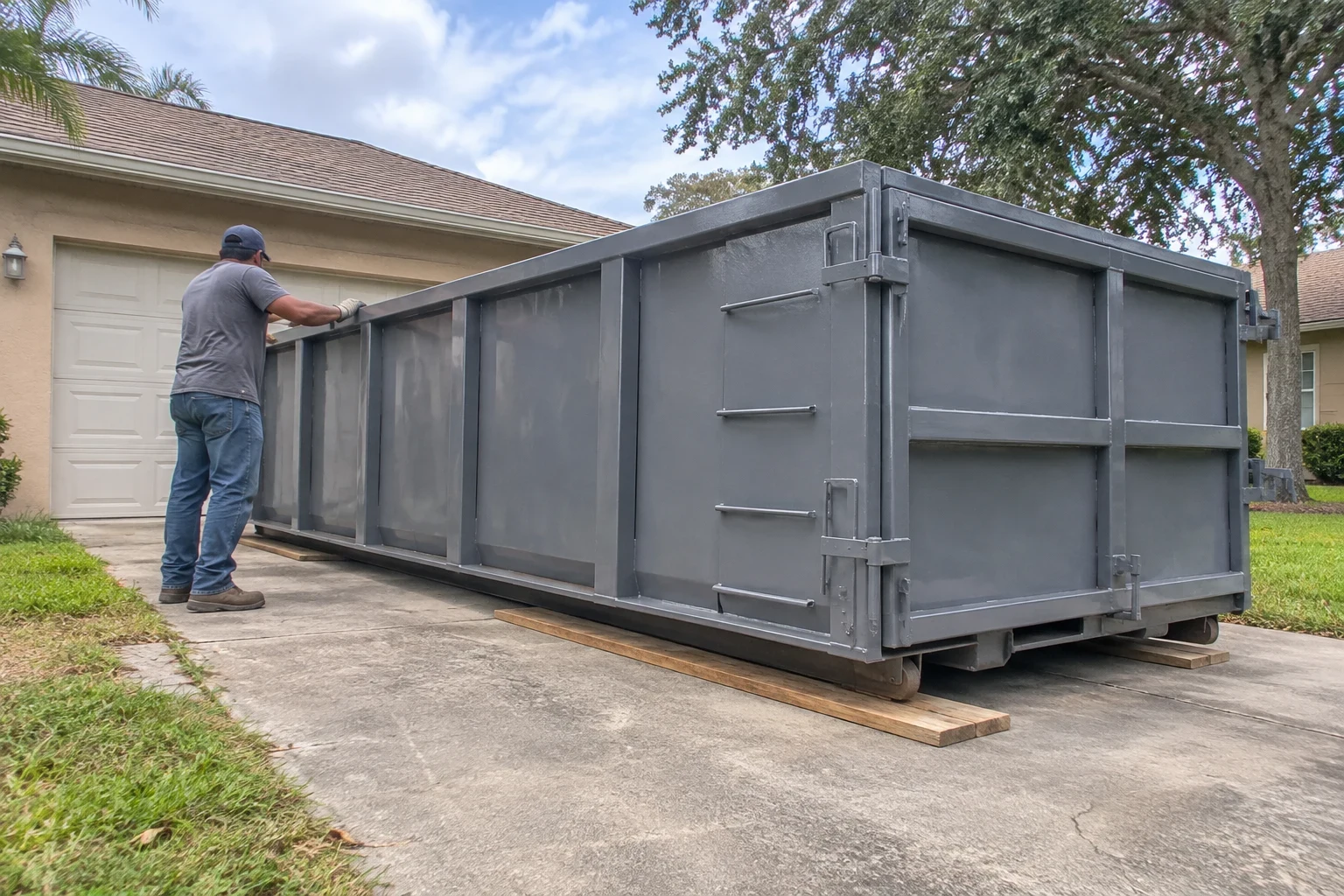
A roll-off is a steel container with an open top that rolls off our truck on two rails and rests on the ground where you'll fill it. Most come with a swing door on one end, so you can wheel in a wheelbarrow or pull a couch inside rather than lifting it over the side. The size is given in cubic yards, which measures volume, not weight.
Because volume and weight are not the same thing, we begin with the type of debris. Old carpet and furniture leave a box mostly empty space. Fill that same box only a third of the way with wet sod or broken concrete and it can outweigh a full load of household junk. Sizing by what goes in, and not only by how much, keeps the haul legal and the quote correct.
Choose a roll-off for a single project that starts and finishes: a reroof, a garage cleanout, a kitchen gut or a landscaping overhaul. If your business needs regular trash pickup on a schedule, our front load dumpster service is designed for that.
What comes with a roll-off rental
Size matched to your debris
We ask what you are tossing and roughly how much. Heavy, dense debris goes in a smaller box so it stays within weight limits, while bulky, light loads get more yard space.
Careful placement
We set the container where you point, as long as the truck can reach it straight on. We can lay boards under the rails to spread the load on a concrete or paver driveway.
A walk-in rear door
The swing door lets you roll heavy items in at ground level. Close and latch it before you stack debris against it.
Pickup and haul away
When you call to say you are done, we come back, load the box onto the truck and take the debris to the right disposal facility.
Straight answers on what can go in
We tell you before delivery which items are fine, which need separate handling, and which cannot go in at all, so nothing gets sent back after pickup.
Signs a roll-off makes sense for your project
You are tearing off a roof
Asphalt shingles, felt underlayment and nails pile up fast and weigh more than most people expect. A roll-off parked near the eave lets the crew drop debris straight in.
A remodel is opening up walls
Drywall, cabinets, tile and old fixtures fill a pickup bed in a single afternoon. One container on site beats a dozen trips to the transfer station.
The cleanout is bigger than curbside pickup
Estate cleanouts, move-outs and garage purges produce furniture, mattresses and boxes that regular trash service will not take in one go.
Yard work is producing real volume
Palm fronds, oak limbs and torn-out shrubs after a Central Florida storm season take up a lot of space for their weight, which suits a larger box.
Your crew keeps hauling trailers
If contractors are losing hours driving debris off the job site, a roll-off keeps them working and the site cleaner.
How a roll-off rental runs
- 1
Tell us the debris type and the scope
On the call we ask what kind of debris, roughly how much, and where the box should sit. That is enough to recommend a yard size and give you a quote.
- 2
Delivery and placement
Our driver backs in, checks overhead clearance for wires and branches, and rolls the container off onto the spot you chose. Leave a clear, straight path for the truck.
- 3
Load it the smart way
Put the heaviest, flattest material on the floor and spread it evenly front to back. Break down furniture and keep everything below the top rim, since an overfilled box cannot be tarped or hauled safely.
- 4
Pickup when you are finished
Call us when the job is done. We pull the container back onto the truck and haul the debris away, leaving your driveway clear.
What changes the price of a roll-off
A few details we can settle by phone make up your quote. What goes into the box matters more than its size. Give us an honest picture of the material and the price we quote is the price you pay.
- Yard size
- Bigger containers cost more to haul and to dump. We suggest the smallest size that handles the job, not our largest box.
- Debris weight
- Disposal is billed by weight, and roofing shingles, dirt, brick and concrete are all dense. Mixed household junk weighs far less.
- Rental length
- A remodel that runs several weeks is priced differently from a weekend cleanout. Share your timeline at the start.
- Special items
- Tires, mattresses and appliances with refrigerant get different treatment at disposal. We let you know which of these apply before the container arrives.
Questions about roll-off dumpsters
Something not covered here? (407) 955-5947
What is not allowed in a roll-off?
No paint, solvents, motor oil, pool chemicals, batteries or other hazardous materials. Certain items, such as tires or appliances holding refrigerant, may be taken only with separate handling. The disposal facility sets what it accepts, so check with us on anything questionable before it goes in.
Can a roll-off hurt my driveway?
A full roll-off rests its weight on two steel rails. On pavers or concrete, we can place boards beneath the rails to spread it out. Skip soft grass or sand after a heavy rain, since the rails can sink there.
Is it okay to put concrete in with other debris?
Yes, but a container of mixed heavy material hits its weight limit well before it looks full. Dirt, brick and concrete often do better in a smaller container of their own. Let us know what you have and we'll suggest the less expensive way to divide it.
Will I need a permit?
Usually not, if the container stays on your own driveway. If it needs to sit in the street or a shared right-of-way, check with the city first. Your HOA may also have rules on where a dumpster can go and how long it can stay.
What if I load it above the top?
For a safe haul, debris needs to stay under the top rim. Anything piled higher has to be removed before pickup. If you're running out of room, give us a call about a swap or a second container.
Tell us what is going in the box
Describe the debris and the project, and we will recommend a yard size and give you a quote over the phone. When you are ready, we can schedule delivery on the same call.